The Vajrayana school of the Ngagyur Nyingma, which upholds the first of teachings of the Buddha to be translated in the Himalayas, and excels by the “sixfold greatness”, began as the source of the Dharma teachings in the Land of Snow,
followed by the Jowo Kadam, Sakya, Kagyud, Jonang and Gelug.
The Vajrayana teachings that were translated by the likes of Vimalamitra and Ka-Chog-Zhang Sum (Kawa Paltseg,
Chogro Lui Gyaltsen and Zhang Yeshi De) are known as the “ancient translations”. The teachings that were translated later
by scholars such as Rinchen Zangpo, Marpa, Go Kugpa Lhatse and others are called the “new translations”. The terms “ancient” and “new” translations started to be used in the eleventh century, and became widespread after that.
The Nyingma tradition mainly consists of six mother monasteries:
Dorje Drak Monastery
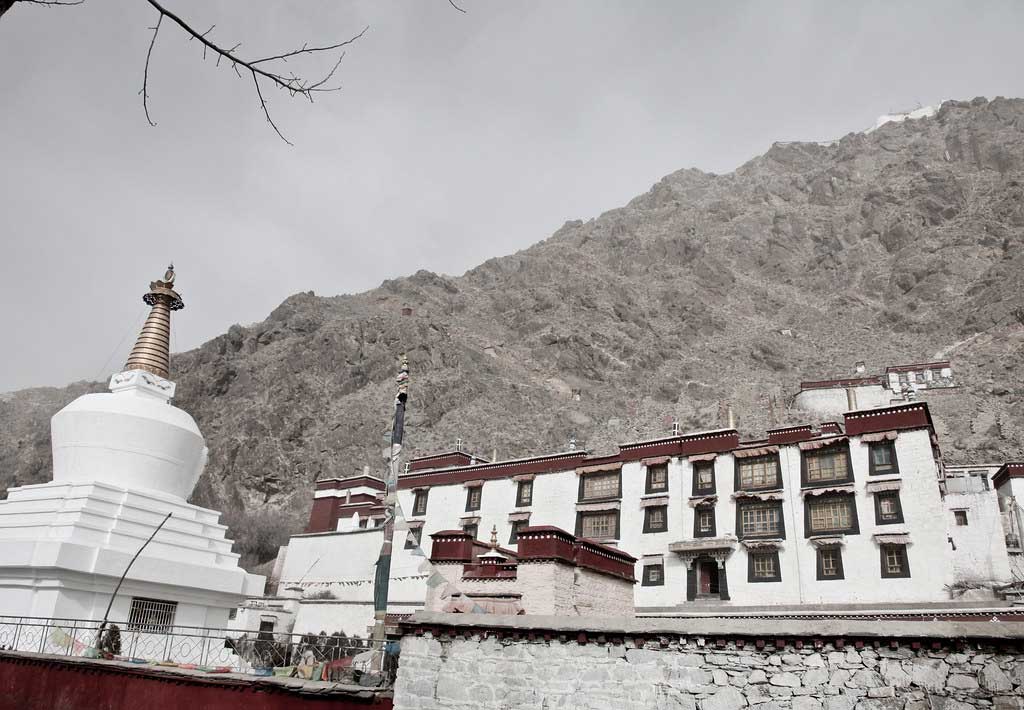
The glorious Ngagyur Nyingma school of Thubten Dorje Drak is located in Lhoka, Shannan District, south of Lhasa in the older south-eastern region of U-Tsang, which is also near the source of the Brahmaputra River. It is also close to the glorious Samye Monastery where there is a meditation cave famously known tohave been visited by Guru Padmasambavaha himself, who practised there.
The great treasure revealer Rigzin Godem Thruchen Ngodrub Gyaltsen, Yolmo Terton Shacha Zangpo, Ngari Pandita Pema Wangyal, the 2nd Godem Rigzin Lekden Dorje, Jangdak Tashi Tobgay, and the 3rd Godem Rigzin Ngagi Wangpo all visited that meditation cave and a small teaching centre was established there. There they mainly taught the Northern Treasure teachings along with other Nyingma teachings.
In 1619, Rigzin Ngagi Wangpo built the first monastery and named it Thubten Dorje Drak Ewam Chokgar. His principle heart son, Yolmo Tulku Tenzin Norbu, headed the monastery for a long period of time, maintaining the teachings and meditation practices of the Dharma.
Then, with the help of the 5th Dalai Lama, the 4th Dordak Rigzin Lobzang Pema Thinley was able to construct two big monasteries and eight small temples over the course of six years from 1666. He established the great tradition of teaching
and practice, and named the monastery Thubten Dorje Drak Ewam Chokgar Chokhor Namgyal Ling.
In 1718, war broke out in that area, and except for the Dharma protectors’ temple, the rest of the monastery was reduced to rubble. After that, in 1726, the 5th Dordrak Rigzin Kalzang Pema Wangchuk ascended to the throne and was able to restore the monastery to how it previously was. Later, during the Cultural Revolution, the monastery was once again destroyed.
In 1985, with resources provided by the Chinese Government, the 10th Godem Jampel Lozang Jigme Lodre took on the hardship of rebuilding the monastery, along with restoring all the sanctuaries, sacred objects, and surroundings.
Mindroling Monastery
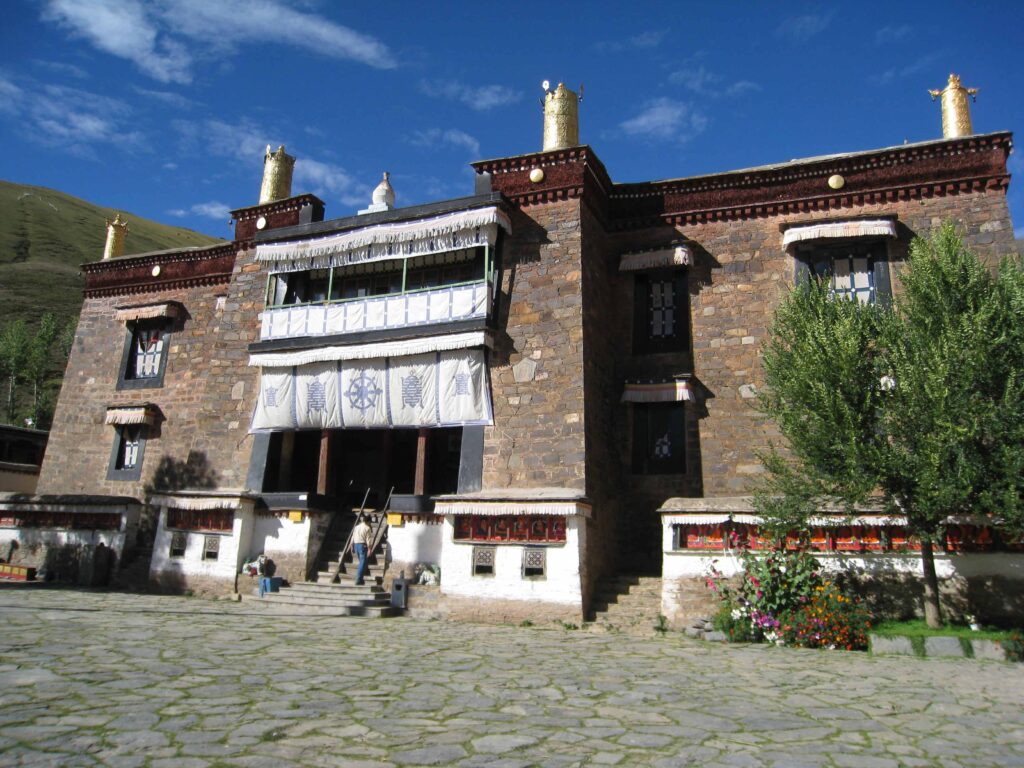
The source of the Ngagyur Kama and Terma teachings, the great Dharma centre of Ugyen Mindroling, is located in U-Tsang, near the Yumbu Lakhar and Tha Druk temples. There a monastery was built by an emanation of Ratna Lingpa, Tulku
Natsog Rangdrol. Then, great beings such as Terton Pema Lingpa’s emanation, Tulku Tenzin Drakpa, and the emanation of Tulku Natsog Rangdrol, Nyeton Khedrub Chenpo Dongag Tenzin, maintained the monastery and stayed for the sake of beings.
Then Rigzin Thinley Lhundrup’s son, Minling Terchen Gyurme Dorje (a.k.a. Terdak Lingpa), was born. He studied and accomplished the vast teachings of the sutras and tantras, along with Kama, Terma and other teachings, under many masters. He was then appointed as the first throne holder of the monastery.
He revealed many treasures and in 1670 he established Mindroling Monastery. The 5th Dalai Lama donated the provisions required to support the monastery. Around three hundred monks gathered and put great effort into learning and practice, thereby shining forth the light of Guru Rinpoche’s teachings.
The younger brother of Terdak Lingpa, Gyalsay Tenpai Nyima (a.k.a. Lochen Dharma Shri), was appointed as the first abbot of the monastery. In 1717, Dzungar Tsewang Rabten from Dzungar Khanate invaded Tibet and destroyed many Nyingma monasteries and retreat centres. Many chief lamas of Dorje Drak and Mindroling, such as Minling Lochen Dharma Shri, Dordrak Rigzin Pema Thinley and Rigzin Pema Gyurme Gyatso, were assassinated.
During that time, Gyurme Rinchen Namgyal and Gyalse Neywai Gonpo, who were brothers, secretly fled to Kham via Mon. Jetsun Minjur Palden and a handful of others also had to leave for Dejong (Sikkim). Then, in 1720, the Mongolian army left and the 7th Dalai Lama issued an order to restore the Nyingma lineages and monasteries which were destroyed during
the invasion. Accordingly, led by Rabjampa Ugyen Kalzang and Rabjampa Ugyen Chodrak, they began the restoration of the monasteries and the retreat centres.
Upon completion, they sent messages to Nepal, Sikkim and Nyarong, inviting Gaylsay Rinchen Namgyal and Jetsun Minjur Palden. Thanks to the 7th Dalai Lama, the lineages were all restored but after the Chinese occupation of Tibet in
1959, the monasteries were destroyed again.
Shechen Monaster
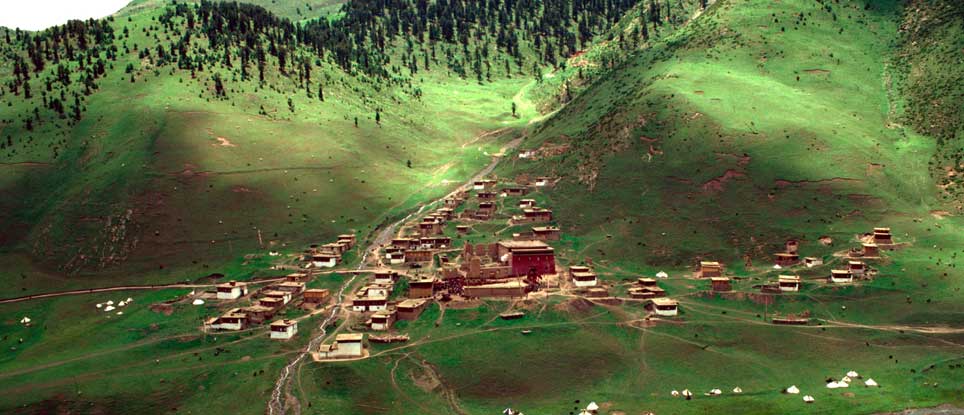
Shechen Monastery is located in Kham in what is now Derge, Sichuan, China. It was established in 1698 by the 1st Shechen Rabjam, Tenpei Gyaltsen, who was a student of the 1st Dzogchen Rinpoche. From there, Lama Pema Wangchuk and eight other great students maintained the monastery by establishing the three Dharma supports—images, texts, and stupas—and further increasing the number of monks.
The 2nd Shechen Rabjam, Gyurme Kunzang Namgyal Losel Gyatso, was born as the younger brother of the 2nd Dzogchen Rinpoche in 1713. At the age of five his former students invited him to his seat at the old Shechen Monastery, Ugyen
Chodzong Retreat Centre. During that time, when Minling Gyalse Rinchen Namgyal visited Kham, he was
invited to Shechen Monastery. There he gave many empowerments mainly of the new treasure teachings of the Minling tradition.
The young incarnation of Shechen Rabjam studied under various masters including Minling Gyalse Rinchen Namgyal, and the 2nd Dzogchen Rinpoche, Gyurme Thegchog Tenzin, and mastered the basic sciences along with the sutra and tantra teachings. According to the prophecy of Kalzang Gyatso, he relocated the monastic centre to Shechen Tennyi Dargyeling Monastery, which was located in front of Ugyen Chodzong Retreat Centre. It was built in 1734.
The incarnations of Shechen Rabjam, Shechen Gyaltsab, and Shechen Mahapandita maintained the teachings and meditation practices of the Shechen tradition. The Shechen lineage had over two hundred branch monasteries but they were mostly destroyed during the Cultural Revolution. However, they were later partially restored and are currently continuing the monastic activities.
Dzogchen Monastery
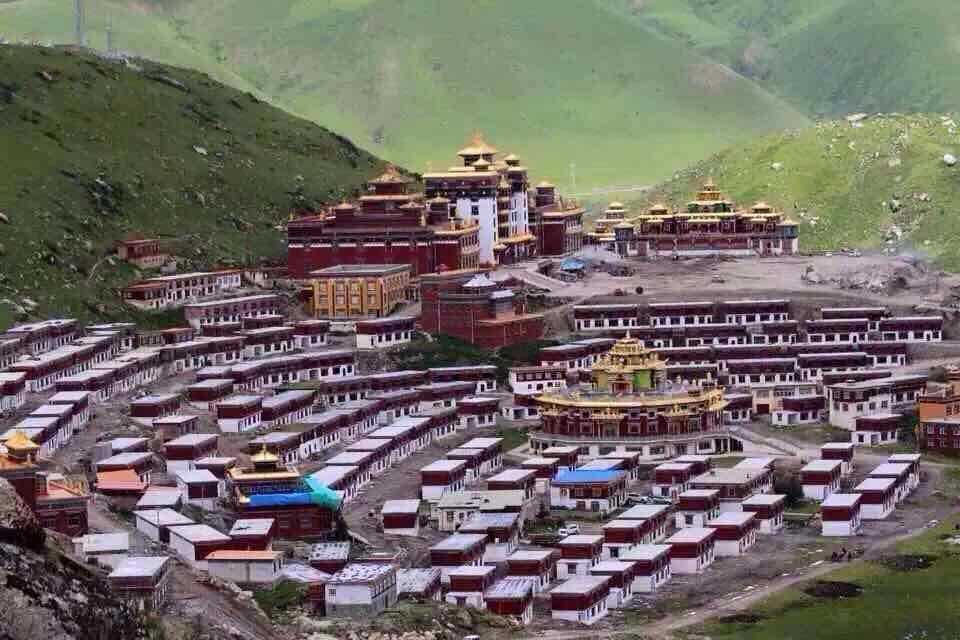
Dzogchen Monastery is situated in the Derge District of Tibet. The lineage originated from the successive transmission of the teachings on the innermost essence of dzogchen. It was passed from one of Dzogchen Monastery’s Dharma holders, Rigzin Chokyi Gyatso, to his disciple, the 1st Dzogchen Rinpoche Drubwang Pema Rigzin. He was prophesied to be the emanation of many buddhas and bodhisattvas, like Desheg Tsuktor Chen, Guru Padmasambhava, and so on.
He also received the secret instructions of the Kagyud linage from Khedrub Karma Chagme from a young age. The treasure revealer Duddul Dorje gave assurances that he would be a Dharma holder.He received teachings and instructions from many masters, and especially from Rigzin Chokyi Gyatso, from whom he received many empowerments and oral transmissions of the dzogchen teachings. He then practised the Dharma for a long time in places such as Lhodrak Kharchu, and so on. He had visions of wisdom deities and received prophesies.
His realization of the view reached to the stage of perfection and became known as Khampa Dzogchenpa. He later became a guru of the 5th Dalai Lama. In 1685, Rudam Ugyen Samten Chokhorling Monastery was established in the Rudam Kyithram area of Derge County. It was built near the foot of a mountain that looks like a crouching lion. There was a gathering of over fifteen hundred monks at that time.
Since then the monastery has been headed by incarnations of Dzogchen Rinpoche, who have illuminated the teaching and practice, and benefiting many beings. The Dzogchen tradition had two hundred branch monasteries but they were later destroyed. Dzogchen Rinpoche’s legacy was later revived from the ashes by Kyabje Pema Kalzang, Kyabje Drukpa Rinpoche and Kyabje Ahchong Tokden Rinpoche, who reestablished their traditional teaching and practice centres. The monastery is currently headed by Kyabje Pema Kalzang.
Kathok Monastery
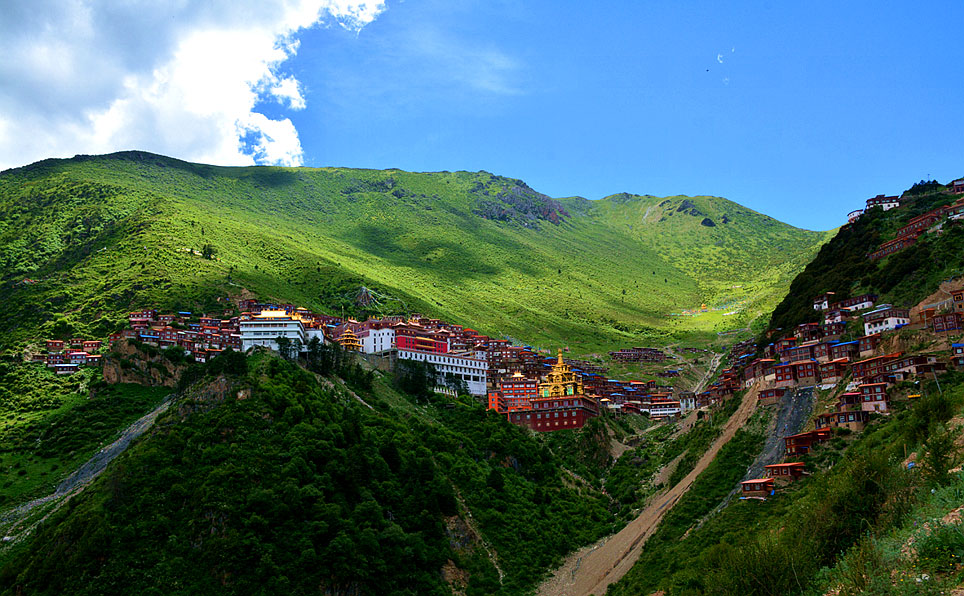
Kathok Monastery is located in Garze Tibetan Autonomous Prefecture, Sichuan, China. The general Ngagyur Kama teachings of Do-Gyud-Sem Sum (Do Gongpa Dupa, Gyud Guhyagarbha and Sem De) were first transmitted to Nyak-Nub-Zur Sum (Nyak Jnanakumara, Nub Sangye Yeshe and Zur Shakya Jungne). From there they were transmitted to Drophukpa Shakya Senge, then to Zamten Drowai Gonpo. He then transmitted them to his close disciple Kathokpa Deshek Sherab Senge.
Deshek Sherab Senge thought that instead of attaining the body of light and vanishing to accomplish only one’s own purpose, it was far better to strive in preserving the buddhadharma, so he established Kathok Monastery in 1159. There he introduced the teachings of Do-Gyud-Sem Sum and many other great sutra and tantra teachings. A study centre and a retreat centre were also built. Over a thousand monks were residing in the monastery.
He taught the students of the study centre during the summer and gave empowerments and instructions to the monks of the retreat center during the winter. The great monastery had many disciples who attained the rainbow body and high realizations.Later, during the seventeenth Rabjung Cycle, the great terton Rigzin Longsel Nyingpo renovated the monastery. The Kathok tradition was upheld by various masters like the incarnations of Kathok Situ, Kathok Getse and others.
Palyul Monastery
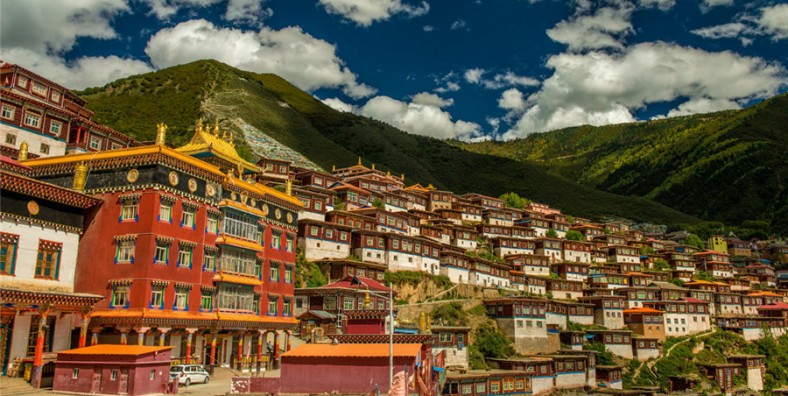
Palyul Monastery was founded by Kyere Chogkyong Wangpo, who was the disciple of Ma Lotsawa Rinchen Chog. Kyere Chogkyong Wangpo was one of the two disciples who were the masters of the Guhyagarbha tantra. A small monastery named Namgyal Tse was founded by Kyere Chogkyong in the 890s in the Do Kham region of Kyere Jong, which is in the modern day Sichuan Province, on the west side of the autonomous region of Palyul District. There he turned the wheel of Dharma for the assembly of monks without interruption.
In the seventeenth century, the ruler of Derge enlarged Namgyal Tse Monastery and invited Serlo Tenpa Gyaltsen to be the vajra master but he declined due to his old age. Serlo Tenpa recommended Rigzin Kunzang Sherab to be appointed as
the vajra master of the monastery and said that he would benefit both sentient beings and the buddhadharma. Accordingly, in 1665, Rigzin Kunzang Sherab consecrated the monastery and named it Palyul Namgyal Jangchub Choling.
He first gave pratimoksha vows to the monks, establishing the ethical base of the buddhadharma. The monks were then taught the basic general preliminary practices for training the mind, up to the highest level of the dzogchen practices. He was the first throne holder the Palyul tradition. From him the lineage of Palyul tradition was passed successively to Pema Lundrup Gyatsho, the 1st Drubwang Pema Norbu, Karma Chophel Zangpo, Karma Lhawang, Gyurme Ngedon Tenzin, Pema Dongag Tenzin, Dongag Chokyi Nyima,
Rigzin Palchen Dupa (the 2nd Drubwang Rinpoche), Karma Thegchog Nyingpo, the 3rd Drubwang Pema Norbu and Karma Kuchen Rinpoche. At present, three tulkus (His Holiness Karma Kuchen Rinpoche, Gyangkhang Rinpoche and Mugsang Kuchen Rinpoche) and three khenchens (Khenchen Pema Sherab, Khenchen Namdrol Tsering and Khenchen Tsewang Gyatso), along with many other tulkus, khenpos and lopons, uphold the teachings and meditation practices of the Palyul tradition.
BY RIGZOD EDITORIAL