Mahaparinirvana of the Omniscient Mipham Rinpoche
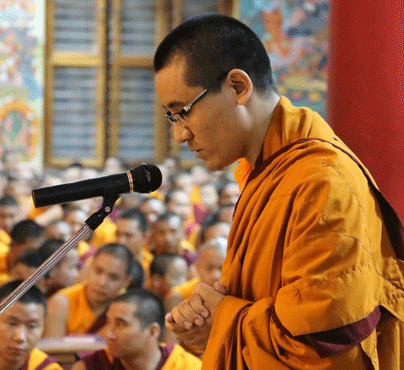
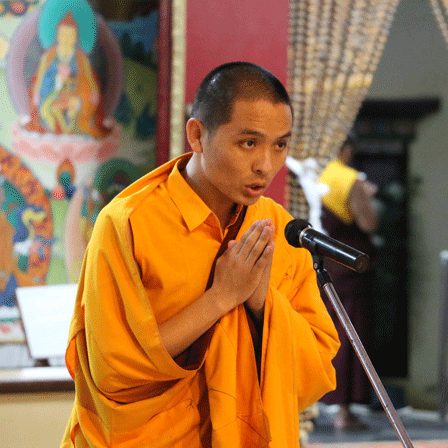
The 105th Mahaparinirvana Anniversary of the omniscient Mipham Rinpoche was held on June 4. The ceremony took place inside the Golden Temple presided over by the president of NNI. Selected students from the second, third, sixth and seventh years gave discourses during the tea breaks respectively on the five uncommon propositions specifically associated with Shantarakshita’s tradition from the Madhyamakalankara, the negation of the four extremes of arising from the Madhyamakavatara, generating bodhichitta from the Prajnaparamita sutras, and the continuum of the ground, path and fruition from Mipham Rinpoche’s commentary on the Guhyagarbha Tantra called Odsal Nyingpo,.
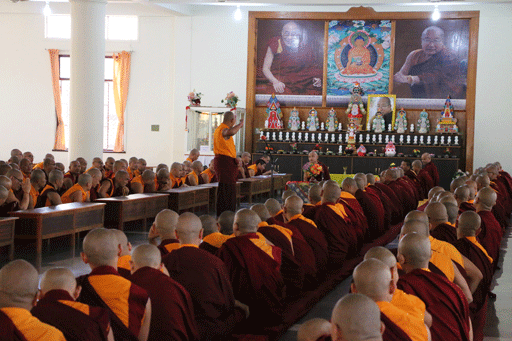
The evening session started with recitation of the Manjushrinamasamgiti. Namdroling monks and nearby lay devotees offered a mandala and auspicious scarves in front of Mipham Rinpoche’s great thangka and text volumes of his compositions. After this, there were debate sessions for about half an hour and then the ceremony concluded at 11 P.M. with various auspicious and dedication prayers.
Universal Incense Offering Day
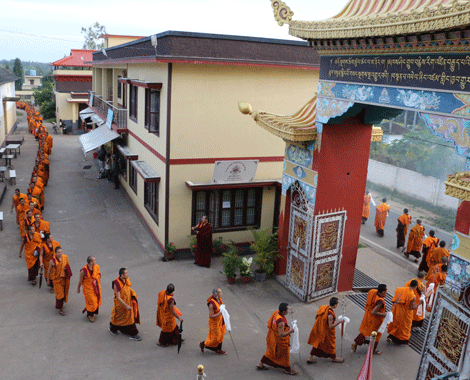
The Universal Incense Offering Day was on July 19. The monks and nuns departed before dawn to climb to the top of nearby Betapur Peak, which is considered sacred both to Nagarjuna (founder of the Madhyamaka school of Buddhist philosophy) and Padampa Sangye (an Indian master who introduced the Pacification of Suffering teachings to Tibet). They performed purification rituals for peace, happiness and prosperity in the world and offered thousands upon thousands of small paper prayer flags into the wind.
Summer Retreat Activities
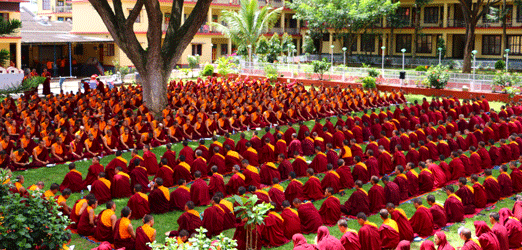
According to the Vinaya tradition, the annual 45-day summer retreat called Yarney began on August 18. More than 375 fully ordained monks and 507 novice monks carried out the retreat.
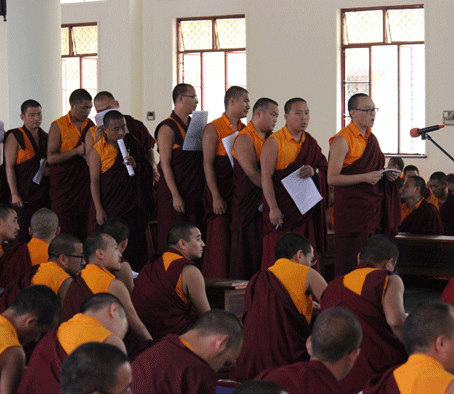
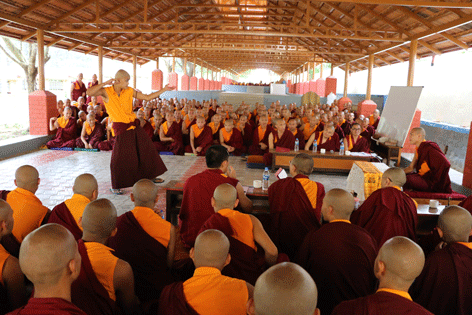
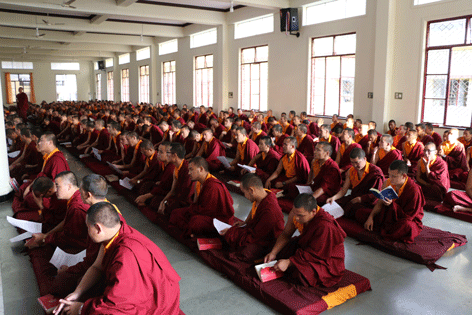
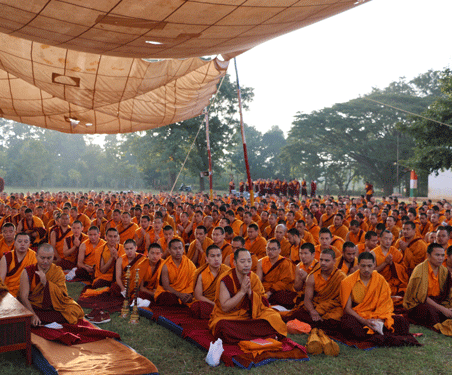
In order to enhance the practice of listening, contemplating and meditating, the participating monastics pledge to remain within a certain boundary. In addition to their regular classes, they attended early morning prayers sessions—including prostrations, recitation of the Heart Sutra and offering of torma—inside the main temple; offered supplication prayers to the Three Jewels during lunch time; and assembled to recite the various root texts from the great Indian and Tibetan scholars in the evening inside the NNI hall. Also, kyorpons (review teachers) from the ninth year published written compositions on given topics and eighth year students as well as others questioned them. Seventh and sixth year students gave discourses on Mipham Rinpoche’s exegesis on the Guhyagarbha Tantra and Paltrul Rinpoche’s commentary on the Perfection of Wisdom. Similarly, students below the fourth year demonstrated their debating skill. Weekly interclass debates were also held simultaneously.
Inauguration of the Palyul Dictionary Editorial Committee
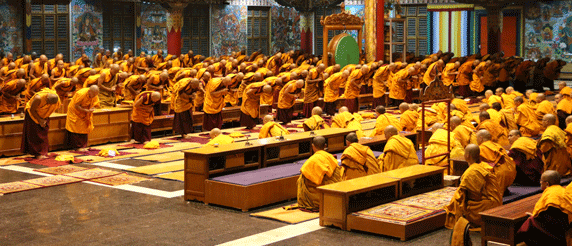
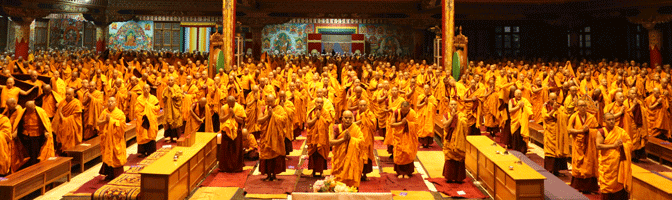
On August 20, 2016, the faculty members of the Ngagyur Nyingma Institute and members of other standing committees, including NNI khenpos and lopons, inaugurated the Palyul Dictionary Editorial Committee. All material comforts were sponsored by Khenpo Dondrub Tashi. The main objective of organising this committee is to gather and compile the unique terms of the Palyul tradition and its successive throneholders, and assemble them in a dictionary. This was particularly organised to write the detailed life story of H.H. Penor Rinpoche, and to promote and restore the lineage and relevant collected works of other scholars and realized masters of Palyul monastery. The standing committee appointed five members, along with a lopon, who will be working on this project and they will be guided by Lopon Tsewang Rigzin and Ogyen Jampa, from the Nyingma dictionary editorial committee that was established a few years back by the International Nyingma Committee. Currently, they are compiling the names of the great people of the Palyul tradition who had vital roles in bringing the tradition up to its current level.
Annual Report of the Padma Mani Translation Committee
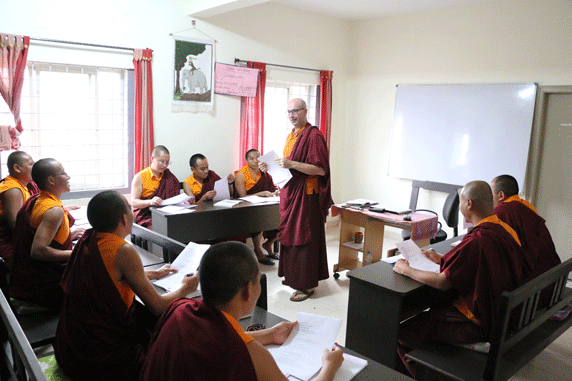
The new academic session for the year 2016 of the Padma Mani Translation Committee (PMTC) commenced on April 12 with Khenpo Sonam Tsewang and Ven. Konchog Norbu as the resident teachers. Since then, alternating classes from 5 to 6 P.M. was over seen by Ven. Konchog Norbu, teaching basic grammar and reading comprehension to the senior students, which consisted of phrasal verbs, tenses, verb forms and vocabulary acquisition and pronunciation, as well as learning how to answer questions for given reading passages.
Khenpo Sonam Tsewang also taught the students the art of translating Tibetan source texts into English. Moreover, with the help of Khenpo and Ven. Konchog, the senior students and nuns collectively finished translating the introduction and visualization manual of the Daily Prayers of the Victorious Palyul Tradition compiled by Tulku Thubzang Rinpoche, and the Extremely Secret Unsurpassable Empowerment of Guru Drakpo, plus reviewing the Palyul preliminary practice prayer book.
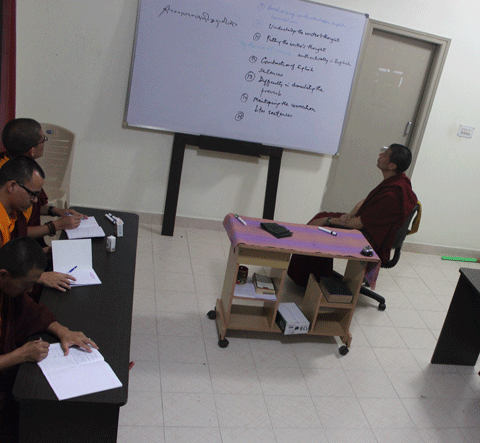
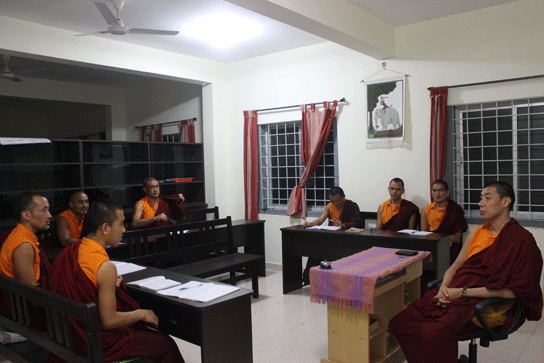
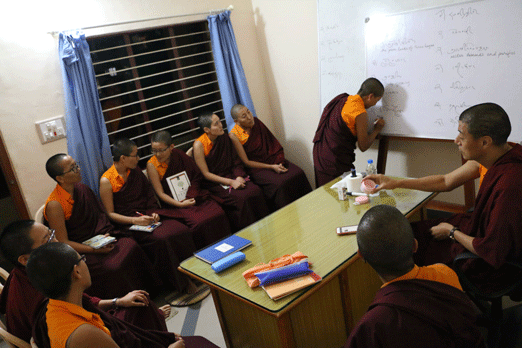
Besides this, senior students attended reading and listening comprehension classes every Thursday, Friday (8:30 to 9:30 P.M.) and Sunday (7:30 to 9:30 P.M.) to enrich their vocabulary and absorb the styles of other well known translated books donated to the PMTC library by generous sponsors. Every Saturday from 8:30 to 10:30 A.M. they focused on the regular module consisting of verbal translation and public speaking.
In addition, the junior monks’ class also collectively translated Tibetan short stories into English with the help of Khenpo, and Ven. Konchog edited the translations. They continued learning spoken and written English skills using the American Headway workbook series.
The PMTC nuns learned comprehension and vocabulary, and engaged in question and answer exercises on some chapters from the book Divine Stories, Douglas Duckworth’s presentation of Mipham Rinpoche’s life story, the Buddha’s turning of the wheel of Dharma from the book The Awakened One, and Lion of Siddhas. They also learned sentence writing, letter writing, modal anxillary verbs, conjunctions and hypothesizing expressions from Ven. Konchog. As a translation project, with the help of Khenpo Sonam Tsewang, they translated part of a text related to Guru Drakpo, sections of the Ngondro and a Tibetan short story entitled “The Donkey that Wore a Leopard Skin”.
Collectively, the monk and nun students contributed individual articles on personal accounts and translated some spiritual stories for the annual Palyul Times magazine. Currently, PMTC students are in the process of translating and transliterating the compilation of the Namchö prayers by Tulku Thubzang Rinpoche as a translation project that may take more than a year to complete. In the beginning week of October, our Indian English teacher Girish Deshpande from Pune visited for a week and taught us note-taking and writing skills for official letter and Dharma announcement writing.
Reported by Sangye Tenzin
9th Year, NNI
Report on the Ngagyur Nyingma Research Centre’s participation in the Dzongsar Institute’s research workshop
The four researchers who constitute the first batch of the Ngagyur Nyingma Research Centre (NNRC) at NNI—Khenpo Tashi Dorje, Khenpo Urgyen Rigzin, Lopon Palzang Dhargye, and Loponma Karma Yangchen—and the three candidates of NNRC’s second batch—Khenpo Choephel Norbu, Lopon Kalsang Dhondup and Loponma Chhawang Doma—participated in the Research Workshop Level 1 held at the Dzongsar Khyentse Chokyi Lodroe Institute (DKCLI), Chauntra, Himachal Pradesh, on September 18–27, 2016.
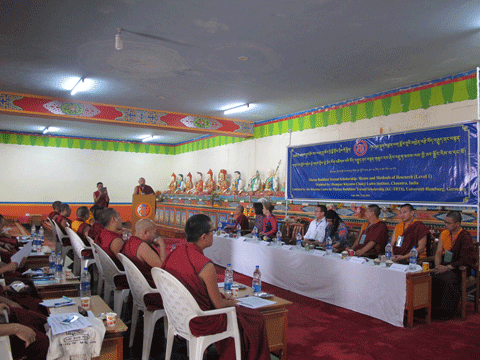
The research project of which this workshop was a part, the Academic Research Project Initiative (ARPI), is the brainchild of Prof. Dorji Wangchuk and Dr. Orna Almogi of Hamburg University, Germany, and is supported by the Khyentse Foundation. Presently, NNRC, NNI, Namdroling Monastery; Shechen Institute, Shechen Monastery; Dzongsar Institute; and the Central Institute of Buddhist Studies (CIBS) in Leh, Ladakh, are participating in this project.
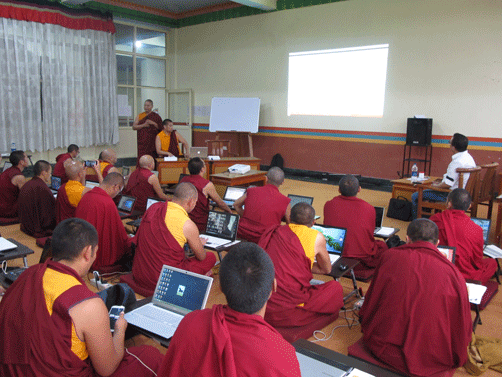
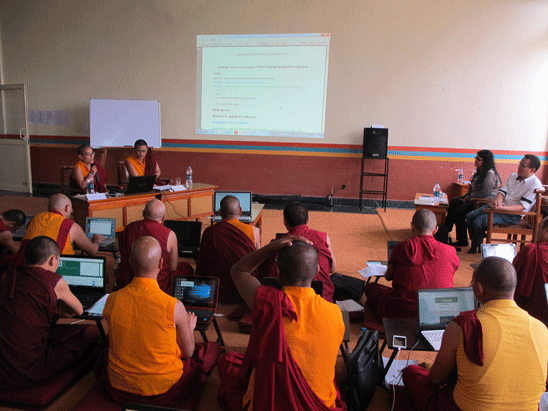
During the ten-day program, Prof. Wangchuk and Dr. Almogi, assisted by Rebecca and Sonam Choden, gave instructions on the Wylie transliteration scheme for Tibetan script, critical editing, research resources, and establishing the text, followed by presentations on the Tibetan Buddhist canon, the Vidyadhara Pitaka, Jamgon Kongtrul’s Catalogue of Golden Teachings, and Longchenpa’s Summary of Secret Mantra.
The highlight of the program was the role of assistant instructors that the four researchers from Namdroling took at the workshop. On Sept. 22, they jointly spoke on the purpose, benefit, aims and objectives of textual research, how to create a bibliography, and the identification of citations. They also oversaw exercises on resources, and the identification of texts, citations, authors, places, and so forth.
On the 24th, they gave presentations on their joint project on Rongzompa’s Establishing Appearances as Divine (Tib. snangba lha sgrub), and their individual projects on Rongzompa’s Entering the Way of the Mahayana (Tib. theg chen tshul ’jug), Nubchen Sangye Yeshe’s Lamp of the Eye of Meditative Practice (Tib. gsam gtan mig sgron), Yeshe De’s Distinctions of the View (Tib. ta ba’i khyad par) and King Trisong Deutsen’s Perfect Valid Cognition (Tib. bka’ yang dag pa’i tshad ma). The outcome of the research activities that the NNRC undertook from 2014 to the present proved to be successful in all respects, which everyone present at the workshop acknowledged and appreciated. The participants from other monasteries were inspired with the work that the NNRC researchers have done so far. In short, the NNRC proved to be a role model for other monastic and non-monastic institutions in the field of Tibetan Buddhist textual research scholarship thanks to Prof. Wangchuk and Dr. Almogi’s expert supervision, the scholars’ hard work, and of course the support from the NNRC and NNI administration.
On the evening of the 26th, representatives of the four institutions—Gyalse Tulku Rinpoche from Shechen, Khenpo Sonam Tsewang from NNRC, Khenpo Samdup from DKCLI, and Geshe Konchok Wangdu (Director of CIBS, Ladakh)—held a meeting chaired by Prof. Wangchuk and Dr. Almogi regarding the future course of action for the four institutions in taking the project ahead.
Prepared by Khenpo Sonam Tsewang
Secretary, NNRC
Activities at the Monastic Junior High School
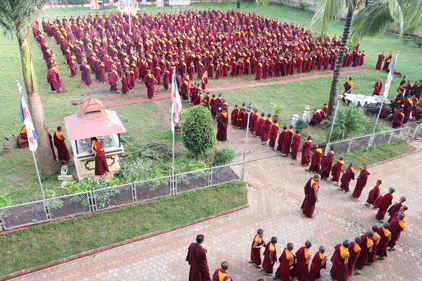
The academic year of the Yeshe Wodsal Sherab Raldri Ling (YWSRL) Junior High School commenced on March 15, 2016. Mugsang Kuchen Rinpoche and Khenchen Tsewang Gyatso awarded certificates to the final year students of YWSRL Jr. High School. They also handed prizes to the first, second and third position holders of every class as well as to those who memorized texts over fifty pages. The event ended with the delivery of spiritual advice. The teaching of their respective classes started on March 18 and progressed well throughout the year.
This year more than eighty newcomers were admitted to the YWSRL from India, Nepal, Bhutan and other places. Presently, more than nine hundred students are industriously studying there. This year there are seventy-seven tutors in total—two khenpos, twenty-five lopons, who are working as administrators, and fifty others who are students from NNI and school itself, teaching rituals, traditional Tibetan art, English and maths.
The post-exchange ceremony was held on March 9 in the presence of the old and new standing committees. The coordinators of the different divisions and staff of the previous year were presented thanksgiving prizes and the new members were welcomed with ceremonial scarves (khadak).
On April 4, new faculty members and khenpos lectured the students about managing the administration throughout this year. The senior students above the 4th class engaged in the rituals with the monks of the Dratsang during the 10th and 25th days of every month, as well as during other prayer ceremonies according to the requests of sponsors. The students of the 7th and 8th class participated in the ritual dance during the Kama Drubchod that was held in May. They also attended the 45-day summer retreat practice that started on August 18. During the academic year, students were given spiritual advice by khenpos and lopons once every month.
Activities at the Nunnery Dratsang
At the commencement of the Tibetan royal year 2143, February 9, the nuns of Tsogyal Shedrub Ling Nunnery performed a four mandalas ritual of Tara, sang offering, and so forth in their congregation hall. After that they took part in the auspicious new year celebration in the main temple at Namdroling with His Eminence Gyangkhang Rinpoche, khenpos, lopons and other monks. The gathering there offered auspicious scarf before the throne of H.H. the Dalai Lama, H.H. Yangsi Rinpoche and H.H. Karma Kuchen Rinpoche, and also made auspicious prayers to have a good start to the year.
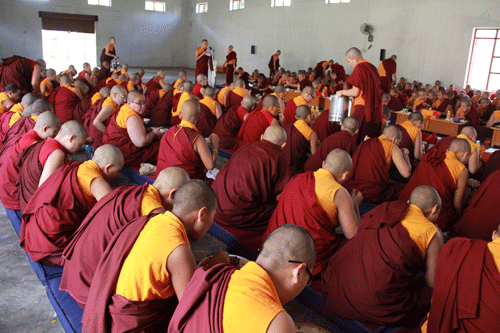
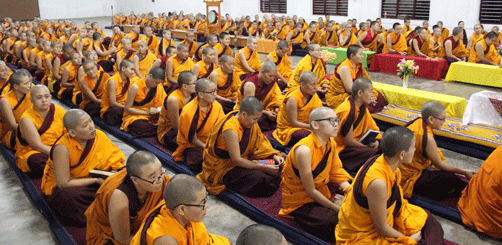
Starting from February 15 they attended a week-long drubchen. Some of them also practiced in the annual 30-day Ngondro, Tsalung and Dzogchen retreats, which began on February 24.
In accordance with the vision of H.H. Penor Rinpoche, every day they engaged in the practice of the four mandala ritual of Tara in the morning, and confession and prayers to the Dharma protectors in the evening. On auspicious days they offer feasts of Rigzin Düpa and Yumka. On April 31, His Eminence Yangthang Rinpoche led the consecration ceremony of H.H. Penor Rinpoche’s reliquary stupa at the nunnery.
On April 12, the annual post exchange was held in the presence of Khenpo Yeshe Dorje, the outgoing principal of NNI and the nunnery, and Tulku Drong Ngur Choje. On its next day, Khenpo Pasang Tsering, the newly appointed principal of NNI and the nunnery, bestowed spiritual advice upon the nuns to study well and fulfil their purpose in coming there.
The annual rites of the nunnery were held on April 30 by reciting the Kangyur and prayers to the Dharma protectors, and offering sang. They invited Lama Phurba Thinley and thirty other monks from the monastery Dratsang, and opened the Vajrakilaya mandala for three days. Nuns performed the ritual of Vajrasattva inside the main temple of the nunnery during Saga Dawa—the month of the Buddha’s taking birth, attaining enlightenment and entering into parinirvana. They participated in performing the rituals according to the request of the Dharma patrons as well as learning the art of rituals such as making tormas, playing cymbals, and so on. Nuns of the nunnery Dratsang along with the senior nuns from the nunnery’s Jr. High School sat for the 45-day Yarney rains retreat that started on August 18. They will travel to Bodhgaya in January, 2017, in order to attend the 28th Nyingma Monlam Chenmo, after which some will return to the nunnery while some will go to home for their holiday.
Activities at the Ngagyur Nyingma Nunnery Institute (NNNI)
On March 11, the newcomers to the Ngagyur Nyingma Nunnery Institute (NNNI) appeared for the entrance exams coinciding with the beginning of the year’s academic session. This year thirty nuns were admitted in the preliminary class and forty-one in the first standard. The results announcement and the awards ceremony for the previous academic year were held on March 16, along with that for the students of NNI, in the main temple at Namdroling. More than twenty-five loponmas were sent to different monasteries and schools in Nepal, India, Bhutan and other countries in order to render their service in benefiting beings in myriad ways. NNNI has produced one hundred and eighteen loponmas since 2004.
According to the noble intention of H.H. Penor Rinpoche, the rules and administration management were instituted in the same way as at NNI. From April, five lopons from NNI as well as eighteen loponmas took responsibility to teach the NNNI students. On June 4, the mahaparinirvana anniversary of the omniscient Mipham Rinpoche took place at Tsogyal Shedrub Ling Nunnery. The nuns gathered early in the morning and made actual and visualized offerings to mark this auspicious day. Also some select nuns engaged in exposition and debate on Mipham Rinpoche’s texts to honour him as one of the greatest expounders of the Ngagyur Nyingma tradition. The celebration ended with auspicious and dedication prayers in the evening. The nuns also took part in exposition, composition and debate during the summer retreat to enhance their knowledge of Buddhist philosophy. This year 227 nuns observed the summer retreat. The summer retreat activities were identical to those of the monks of NNI. The annual examinations at NNNI will take place between December 17, 2016, and January 3, 2017. Afterwards, they will go to attend the 28th Nyingma Monlam Chenmo in mid-January. Some nuns will also go prior to the Monlam Chenmo in order to do prostrations, accumulate mandala offerings, and so on.
Inauguration Ceremony of Palyul Thubten Shedrub Choekhor Dargyeling at Bodhgaya, Bihar
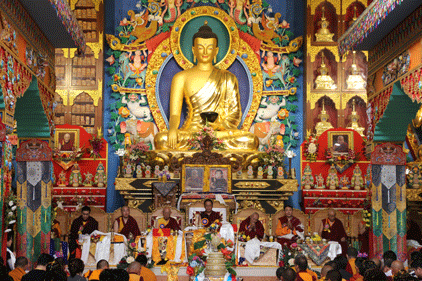
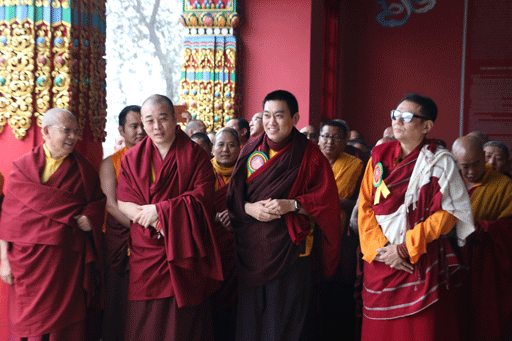
The opening ceremony of Ngagyur Palyul Thubten Shedrub Choekhor Dargyeling, the new Palyul monastery situated near the holy site of the Buddha’s enlightenment in Bodhgaya, Bihar, took place on January 19 and 20, 2016. This monastery was established according to the noble wishes of His Holiness Penor Rinpoche. The temple’s foundation was laid in 2008 by His Holiness himself and was successfully completed by the end of 2015. The actual inauguration took place in the afternoon on January 19, where H.H. Karma Kuchen Rinpoche, Domang Yangthang Rinpoche, Palyul Chogtrul Rinpoche, Khentrul Gyangkhang Rinpoche, Chogtrul Mugsang Kuchen Rinpoche, Khenchen Pema Sherab, Khenchen Namdrol Tsering, Khenchen Tsewang Gyatso, Rigo Tulku Rinpoche, and many other khenpos, lopons, lamas, tulkus, monks and nuns, as well as students of His Holiness from abroad, were present during the ceremony. In the evening, Gyangkhang Thubten Palzang (Thubzang) Rinpoche bestowed the empowerment of Konchog Chidü upon the gathering.
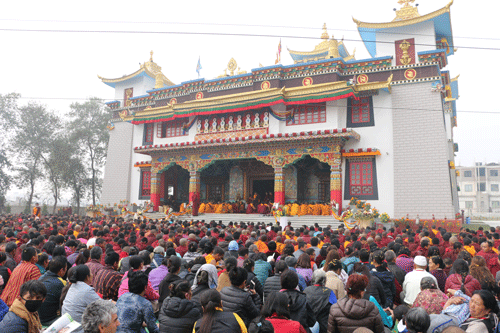
On January 20, the consecration ceremony for the reliquary stupa of His Holiness Penor Rinpoche was held in the morning and in the afternoon. His Holiness the 17th Gyalwa Karmapa, Ogyen Thinley Dorje, presided over the blessing of the statues inside the temple and the reliquary stupa.
A brief introduction of Thubten Lekshey Ling, a Buddhist centre in Bangalore
Thubten Lekshey Ling is a Palyul Dharma Centre for Buddhist studies and meditation in Bangalore, south India, founded by His Holiness Penor Rinpoche in 2008. The centre was blessed with its name ‘Thubten Lekshey Ling’ (Place of the Elegant Exposition of the Teachings of the Buddha) by His Holiness. Under the guidance of H.H. Penor Rinpoche, his Indian disciples Yogi Prabodha Jnana (Ajith Prasad) and Yogini Abhaya Devi (Priya Ananda), were instrumental in establishing the centre and requesting Namdroling Monastery to guide it. Khenchen Tsewang Gyatso inaugurated the centre by giving teachings. Due to the continuous support from all the dedicated sangha members, the centre is now located in Bangalore’s Electronic City neighbourhood.
The centre offers Dharma teachings, meditation classes, and guidance to every enthusiastic follower, as well as organizing daily practice, special weekly practice, feast offerings (Tsog) on auspicious days, and Vajrakilaya practice on every ninth, nineteenth and twenty-ninth day of Tibetan lunar calendar. Every year, the centre invites senior teachers from Namdroling Monastery to give teachings and empowerments. All the programs are conducted in English and those who are interested can attend the programs without any charge.
Most of the regular sangha members are Indians who are interested in Buddhist philosophy and meditation. In the early years, the centre used to rent a room in a multi-religion community called Ashirvad to conduct a program every Sunday. In due course, many students joined the centre to practise Dharma. Consequently, the centre rented an apartment along with all necessary facilities in the heart of the city. This facility was inaugurated by His Holiness Karma Kuchen Rinpoche on March 31, 2011. The centre also established an extensive Dharma Library. Regular pujas, including Tsog offerings on the 10th and 25th day of the Tibetan Lunar calendar, were conducted in this place. H.E. Tulku Thubzang Rinpoche also visited the centre in 2012. As of now, more than fifteen practitioners from the centre have participated in the month-long retreats (Ngondro, Tsalung and Dzogchen) at Namdroling monastery.
Since its inception, H.H. Penor Rinpoche, H.H. Karma Kuchen Rinpoche, H.E. Khentrul Gyangkhang Rinpoche, Khenchen Pema Sherab, Khenchen Namdrol Tsering, Khenchen Tsewang Gyatso, Khenpo Jamyang Tsering (Katyayana), Khenpo Tsering Dorje, Khenpo Jigme Kalzang, Khenpo Tshewang Sonam, Khenpo Yama Chime, Khenpo Sonam Tsewang, Tulku Choeddhar, Dolpo Tulku Sherab Zangpo, Lopon Chogyal Wangdi, and many other teachers have blessed the centre and bestowed profound empowerments, transmissions, and instructions, thereby benefiting the fortunate beings.
Under the spiritual direction of H.H. Penor Rinpoche, his two students Yogi Prabodha Jnana and Yogini Abhaya Devi have made considerable contributions by serving the centre since its establishment. Moreover, Yogi Prabodha Jnana also taught in the centre until 2016. This year, they retired from all its administrative roles.
At the behest of the board and sangha members of Thubten Lekshey Ling, the board members of the Ngagyur Nyingma Institute of Namdroling Monastery appointed a lopon as the centre’s resident teacher for the year 2016-2017, thereby providing teachings on all days. At present, all the activities of Thubten Lekshey Ling are carried out under the directions of the board members which include centre’s resident teacher. The centre’s board members are headed by its spiritual director, Khenchen Tsewang Gyatso.
By Thubten Lekshey Ling
Board Members